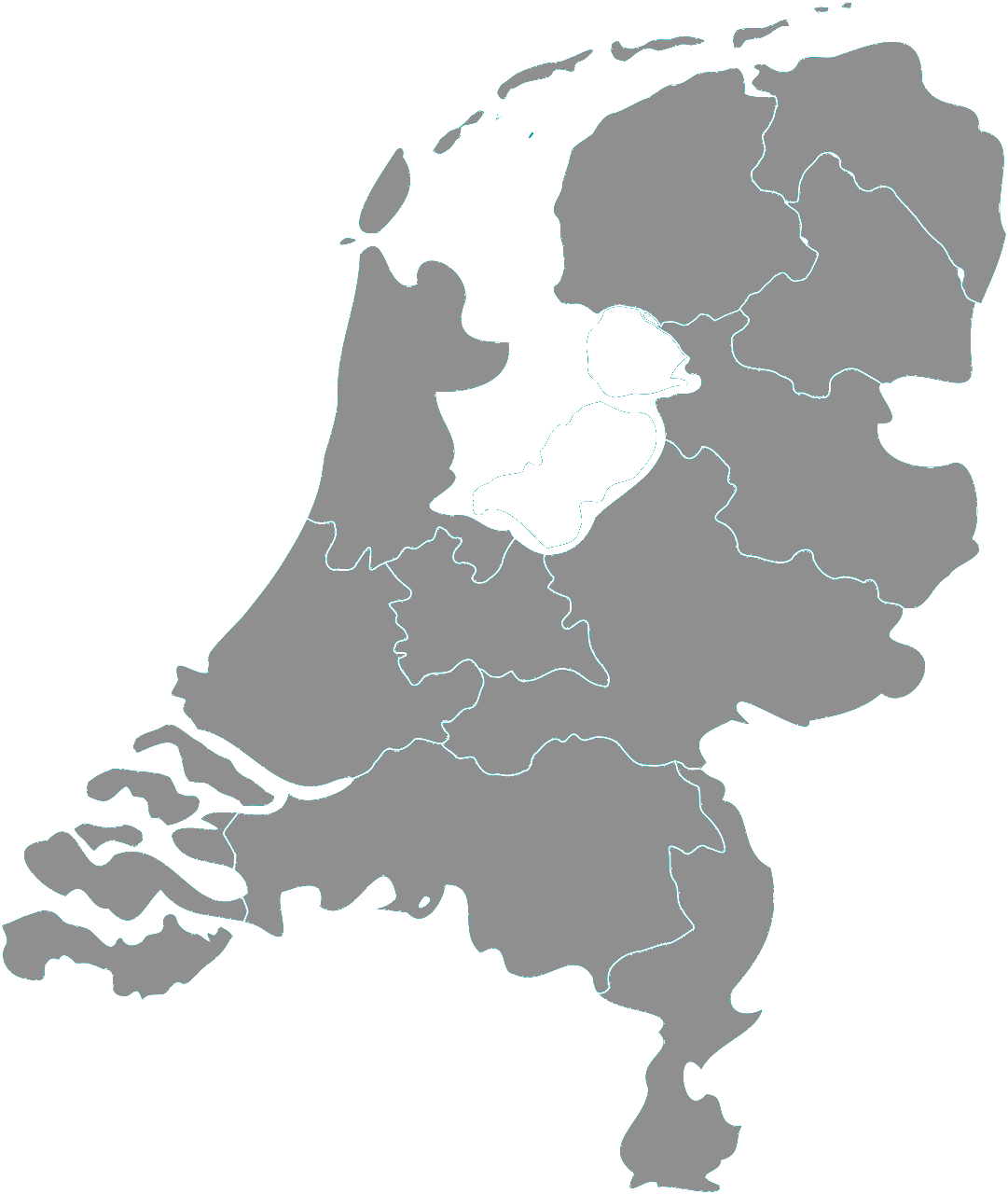
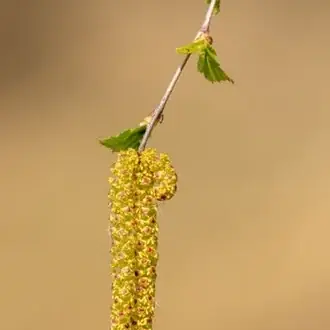
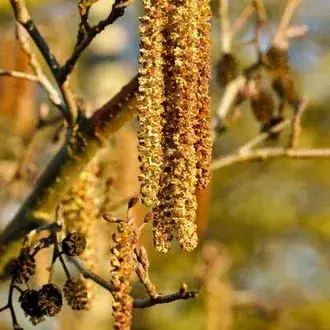
Almere is the youngest city in the Netherlands, and that makes its pollen situation unusual. The ground did not exist half a century ago: the Flevopolder was drained in 1968, and everything growing there now was planted. The Almeerderhout, the Kromslootpark and the Kathedralenbossen are therefore dominated by fast pioneer species — poplar, willow, ash and alder — because those are the trees you can establish first on fresh seabed. Poplar and willow flower in March and April; alder starts earlier, from January.
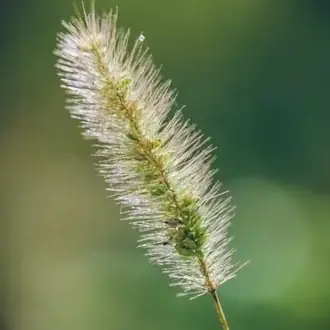
The surrounding landscape is open and flat, with no hills or old woodland to break the wind. That cuts both ways: pollen released here is dispersed and diluted quickly, but under an easterly there is also nothing between the city and whatever is arriving from elsewhere. The IJmeer and the Markermeer to the west do for Almere what the sea does for a coastal city — air crossing water is poorer in pollen. For grass the picture is ordinary: the polder is arable and pasture, and from May to July that is the dominant source.